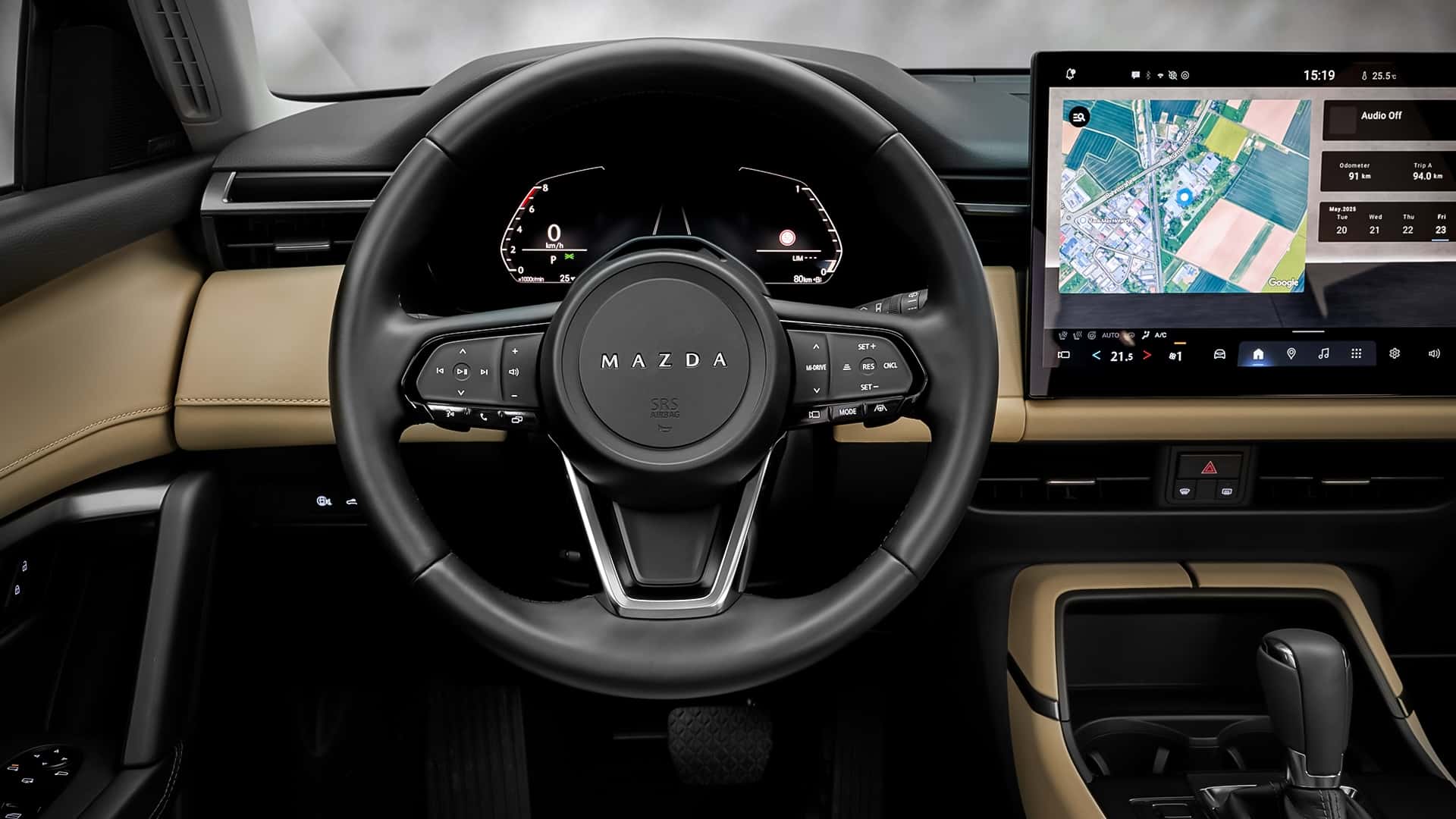
In an automotive market that has rapidly been dominated by large infotainment screens, Mazda resisted the urge to comply claiming that non-touch screens and a diverse array of analog controls would deliver the driving experience they want and for better or for worse, the company’s offerings became bastions for traditional buyers.
The 2026 CX-5 is now moving away from this and will be the first formal model to not only go all-in on fully touch operated screens, but also AI as Mazda prepares to make its long-awaited leap into the world of AI technology and screens.
A new era for Mazda

With the exterior taking a backseat to the interior for 2026, the CX-5’s cabin is our first glimpse at what Mazda is truly talking about in regards to AI. All models sold in the U.S. will come standard with a 12.9-inch display but select trims will get an even bigger 15.6-inch screen.
Of course the notable absence here is the rotary controller a persistent symbol of Mazda’s commitment to maintaining the proverbial status quo. The controller did help improve navigation between menus but it also made other aspects of the user experience very clunky. The controls for the knob and the newly absent HVAC panel have now been relocated to the infotianment screen itself.

According to Matthew Valbuena, the project manager for in-vehicle technologies and HMI at Mazda’s North American operations, the carmaker believes that the most important thing for a driver to do is to focus on driving. One way of doing this is to reduce button clutter and while going to the screen for all functions will take some getting used to, we also see Mazda’s intent here.
A system with a voice and a vision
In addition to helping drivers focus on the whole art of driving, Mazda also wanted to simplify the operating experience which was something its old in-house software was not known for. This time around, Google’s Built-In system is standard and Gemini Voice Control is also along for the ride too to further help in meeting this goal.
“Our goal with the 2026 CX-5 was to make technology easy to use while keeping the driver focused on the road,” Valbuena says. “A great deal of research and testing went into developing Mazda’s latest infotainment system, and we believe it is well positioned to feel familiar to how customers interact with smartphone-like devices.” The steering wheel also plays into this with the tiller being filled with satellite controls so two hands are kept on the wheel at all times.
Will customers actualy make the plunge?
The big question here is how this new setup will be received by consumers? The 2026 CX-5 is serving as the first barometer of this setup and the company will undoubtedly be paying very close attention to how consumers respond to not only plan any potential improvements, but also the possibility of reverting back in the event of consumer backlash.
Volkswagen was forced to walk back its plans to expand haptic controls and screen infused controls in its models after consumer backlash and has since attempted to reintroduce analog controls into their new vehicles. Look for Mazda to coniue to invest in the new tech setup in the short-term as the company looks to expand to other SUV segments (including the flagship CX-90 and the smaller CX-50.)


Leave a Reply