The SUV market is a demanding place these days with volatile pricing, tariffs, and raw competition making the art of getting buyers harder than it has ever been before. As a result, picking which SUV is right for you can be a challenge.
This is especially true in the three-row segment where family buyers demand pefection and want a vehicle that is capable of perfectly balancing everything into one unified package. We decided to compare two of these entries, the 2025 Mazda CX-90 and the 2025 Hyundai Palisade Calligraphy to see which of these SUVs has the right stuff for family buyers.
Two different flavors of style


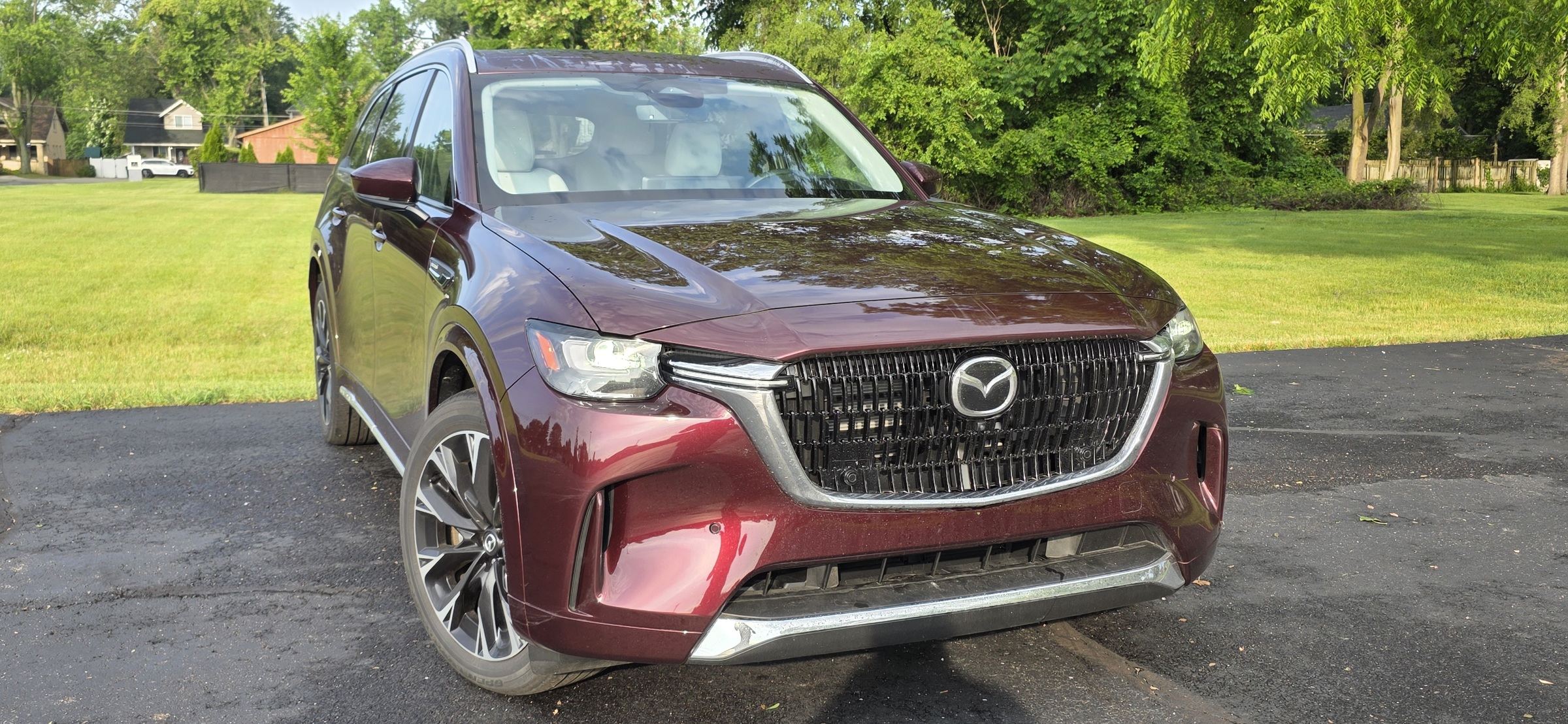
Our Mazda CX-90 arrived as a range-topping Turbo S Premium Plus with these models being the top dog in the CX-90’s very extensive trim ladder. The exterior styling of the Turbo S Premium Plus has alot in common with the default Premium Plus with our tester arriving with plenty of chrome trim and a seductive shade of dark red paint that looks flattering in the sunlight though its appearance during the tail end of a stretch of rainy weather prevented it from being able to show off its full luster. A slek set of 21-inch wheels are also part of the package and work together with the exterior styling to create a sportier take on luxury though the rear end still feels too unbalanced for our tastes.
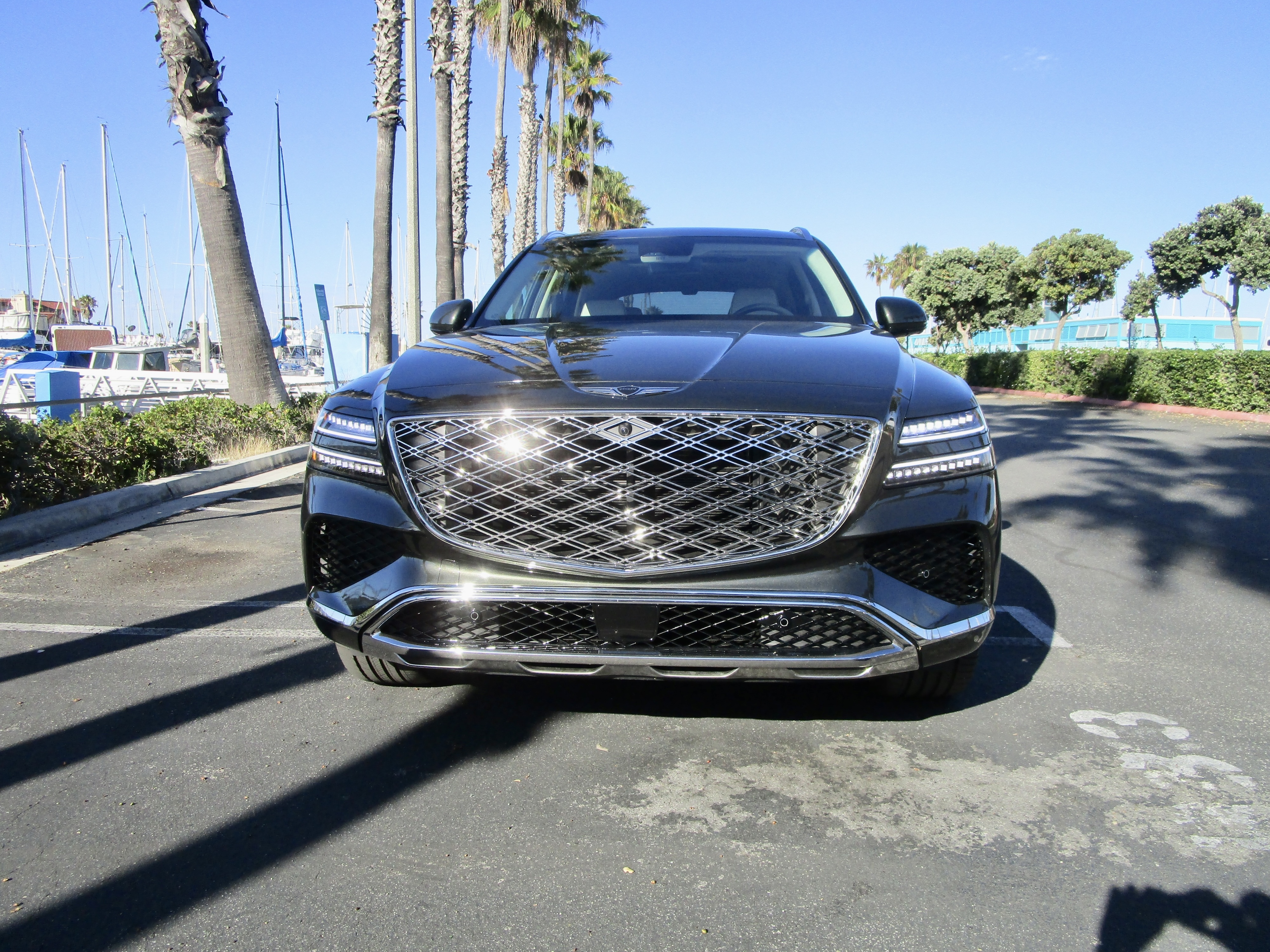
Meanwhile, the 2025 Hyundai Palisade Calligraphy is in an interesting spot with the model currently serving a caretaker role in Hyundai showrooms until the revamped 2026 model arrives. Until it does, the current generation Calligraphy gets to make do with the same exterior styling it has had since a refresh that it received a few years ago. The front end features a large chrome grille with the two-piece lighting with the formal headlights being located in the lower portion of the front bumper. The Palisade embraces a more functional formula with the side profile having a boxier appearance than the Mazda. Calligraphy models also get several other pieces of trim exclusive styling including distinct 20-inch alloy wheels. In this regard, we have to give a nod to the Mazda since we feel its color roster and some of its sporty angles cause it to have an edge over the more conservative Hyundai.
Palisade interior etches a name for itself


When you slip inside the two SUVs, the interiors of each reveal a different aspect of their personality. In the case of the Mazda, interior designers wanted to try and project a strong image of premium quality with our tester featuring curled maple wood accents and fabric accents on the dashboard and door panels. This particular CX-90 was also the first time we had one arrive with the hanging stitch accent which is supposed to replicate Japanese book binding techniques while also letting observers see the stitches that are hidden behind the broader fabric pieces.
Buttery smooth Nappa Leather upholstery is also splashed through out the interior with the second-row even getting their own set of captain’s chairs. A 12.3-inch infotainment system is standard in higher trims (including the Premium Plus) but while the bigger screen brings better clarity, the software continues to be a massive weakness for the Mazda. Part of it is due to Mazda still resisting the urge to put in a formal touchscreen unit with occupants being forced to use a large click wheel to operate everything. This includes inputs for the navigation system and that gets frustrating when subjected to long-term exposure. There is a touch functionality buried in the system, but the caveat here is that you have to use either Apple CarPlay or Android Auto to make it touch capable.
The Hyundai’s system doesn’t have such compromises and while it matches the Mazda’s screen in terms of size, it’s also standard across all trim levels (the base CX-90 Select gets a smaller unit.) The Palisade also gets Apple CarPlay and Andorid Auto and the system’s native software also performs admirably when you choose not to use either of those features. Both SUVs get Amazon Alexa too for enhanced compatibility with certain smart home accessories. The Calligraphy also gets Nappa leather upholstery including headrests that feature moveable wing pieces on the sides to improve long distance comfort. Both SUVs boast ample space for cargo but the Mazda gives up a foot of space with the thrid row up (16 cubic feet versus the Hyundai’s 18 cubes) and this continues in the second row with the Mazda’s 40 cubic feet being six less than the Hyundai’s 46 cubes. When all the seats are folded down the CX-90 can haul 75 cubic feet of stuff though like before, that’s short of the Palisades 86 cubic feet when all the seats are folded down.
Mazda’s gamble on inline performance pays off big

Ultimatly, it’s what’s under the hood that makes or breaks this duel and in the case of the Mazda, it’s a 3.3-liter turbocharged inline-six with the CX-90 being one of the first Mazda models (along with its two-row cousin the CX-70) to use it. While it makes 280 horsepower and 332 lb-ft of torque in other trims, S models like ours get a revised setup that makes 340 hp and 369 lb-ft of torque. Inline motors were once usually associated with European entries, but the decision by Mazda to use one here shows just how serious the company is in competing with these established marques. The increased power makes itself known in freeway driving but the increased low-end punch provided by the engine is a welcome benefit when moving away from stoplights. A 48-volt mild-hybrid system is along for the ride to help improve fuel economy and an eight-speed automatic is standard with the setup helping our tester make the sprint to 60 mph in 6.3 seconds.
In contrast, the Hyundai prefers to cruise through the motions and that’s evident when you look a the naturally aspirated 3.8-liter V6 that makes 291 hp. Like the Mazda, an eight-speed automatic is standard but all-wheel drive is an optional extra with only the Calligraphy Night Edition getting it standard. The V6 is a stout engine, but unlike the Mazda’s inline, it does not like to be rushed with the noisy V6 getting buzzy when pushed in the uper reaches of the rev band. Handling in the Palisade is also not as shapr as the Mazda with the steering having scattered numb spots which made it hard to get a sense of what the front-wheels were doing at times. The V6’s days are numbered though with the 2026 version coming with either a slightly smallr 3.5-liter V6 or a hybrid equipped 2.5-liter turbocharged four-cylinder.
The Palisade’s lack of a formal hybrid system also causes it to come up short in fuel economy too with the EPA saying an all-wheel drive Palisade can get 19/24 mpg in city/freeway driving which is lower than the CX-90’s 23/28 mpg in the same categories with non “S” models getting an extra mpg in city driving.
Which is best?
Pricing between the two is very similar with a base Calligraphy starting a $51,000 (the Night Edition adds an extra $4,500 for its blacked-out charms.) The “S” version of the CX-90 Premium Plus has a base price of $56,650 with our tester arriving with some options that caused it to get very close to $60,000.
Look for the bulk of shoppers to skip the “S” and instead focus on the $49,600 default Preferred Plus which tightens the pricing gap between it and the Hyundai. Pricing aside, we have to give the victory to the Mazda since we feel the CX-90 has a better grasp of some of the core things that SUV buyers want with the interior in particular (minus the infotainment system) offering buyers a greater sense of quality and luxury due to its strategic use of materials. The Hyundai is no slouch in that particular category eithe,r but its age is starting to show and it will be interesting to see how things proceed when the 2026 model begins making its way into U.S. showrooms.


Leave a Reply