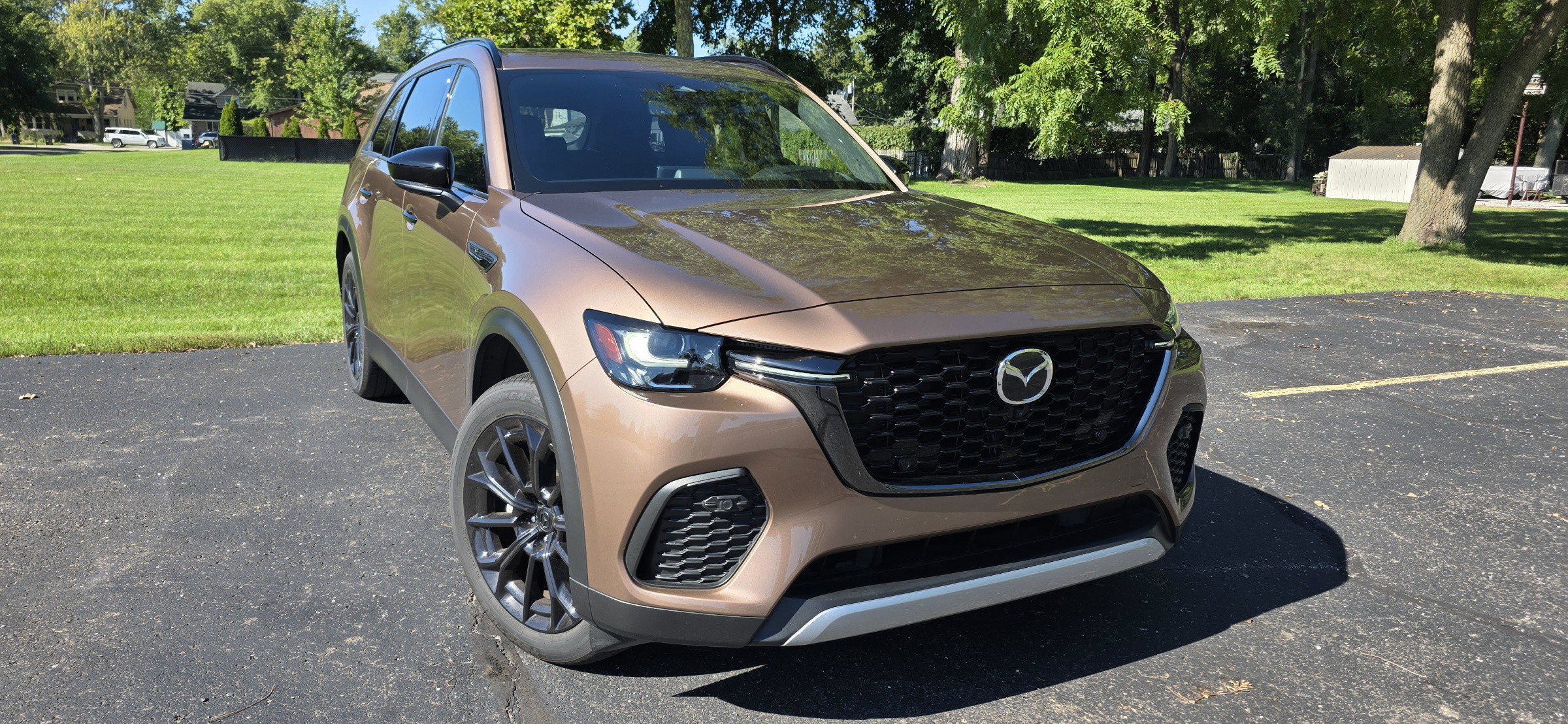
When Mazda first revealed the CX-70 several years ago, it was evident that the company wanted to try to give buyers a vehicle that would not only offer true two-row functionality, but also offer more features for buyers who often find themselves seeking plenty of adventure and other activities.
But while Mazda expected strong sales, the CX-70 proved to be a slower seller than the company thought. This forced Mazda to drop it and subsequently fold the SUV into the CX-90 lineup for 2027. What went wrong here, and how can Mazda learn from it?
Similarity to the three-row CX-90 was a double-edged sword

At first glance, the CX-70 had a reliable blueprint for immediate sales success. With the CX-70’s main change being the removal of the second row, Mazda designers chose to keep it largely in line with the CX-90 when it came to exterior styling. The CX-90 already had a sporty yet elegant look, and Mazda hoped that this DNA would help give the CX-70 a similar appearance.
While models like our tester (which arrived before Mazda’s announcement) certainly delivered the goods in that regard, the similar look also created customer confusion when it came time to put the CX-70 into Mazda showrooms. The different marketing here between the two also seemed jumbled, with the CX-90 and the CX-70 feeling like two different sides of the same coin. Mazda’s decision to fold the 70 into the CX-90 will eliminate this confusion and also allow the company to save money on marketing by having the CX-90 be a unified offering
The interior will continue to be a luxurious place to spend time in

As mentioned, the main difference inside the CX-70 was the removal of the third-row seats, which have been replaced with a bigger storage area that can haul gear and other smaller items. The rest of the layout will be very familiar to CX-90 fans, with high-quality materials, soft leather seats, and plenty of room to stretch out.

That said, the CX-70 and CX-90 as a whole were also starting to fall behind when it came to offering certain equipment, with some rivals offering more standard features than the Mazda. The company is moving to address this with a new infotainment system that will be available in top trims and other minor tweaks. When the CX-90 is revamped, look for more extensive changes to go along with the strong language Mazda’s CEO used recently when talking about its sales woes.
The powertrain was the proverbial diamond in the rough
While some of its similarities to the CX-90 helped ensure the CX-70 was always going to have some trouble stepping out of its brother’s shadow, the one thing the CX-70 shared that was always delightful was the two powertrains that Mazda made for it.
Our tester arrived with the 3.3-liter turbocharged inline-six. This inline-six is available in two tunes, with the base tune producing 280 hp on 14 psi of boost. Our rose gold-esque S tester arrived with the beefier version, which makes 340 hp and runs at a slightly higher 19 psi of boost. The engine delivers strong acceleration, and our tester continued to deliver a bold demeanor in certain driving conditions.
The lingering issue remains its eight-speed automatic transmission. While it’s a smooth operator most of the time, there were occasions when the gearbox was reluctant to downshift when we wanted it to. This is especially true when using the steering wheel-mounted paddle shifters.
The PHEV model delivers better fuel economy, but the 3.3-liter inline-six is no slouch either in this category, with the EPA saying a model like our tester can get 23 mpg city, 28 mpg highway, and 25 mpg combined.
Value Quotient

Buyers looking to still get the CX-70 before the model change happens will be greeted with a base price of $42,750 for the base Turbo Preferred model. Move up the lineup, and most of the trim levels will continue to be under $50,000. This changes when you move into the Turbo S Premium models, with the base Premium starting at $53,440. Our Premium Plus tester starts at $56,870, but minor options helped push the price to just under $60,000 before taxes and fees are applied.
This pricing will drastically change after the CX-70 is absorbed. Buyers will only have two trim levels to work with when this happens: the $48,525 Premium Sport and the $55,185 Turbo S Premium Sport.
Leave a Reply