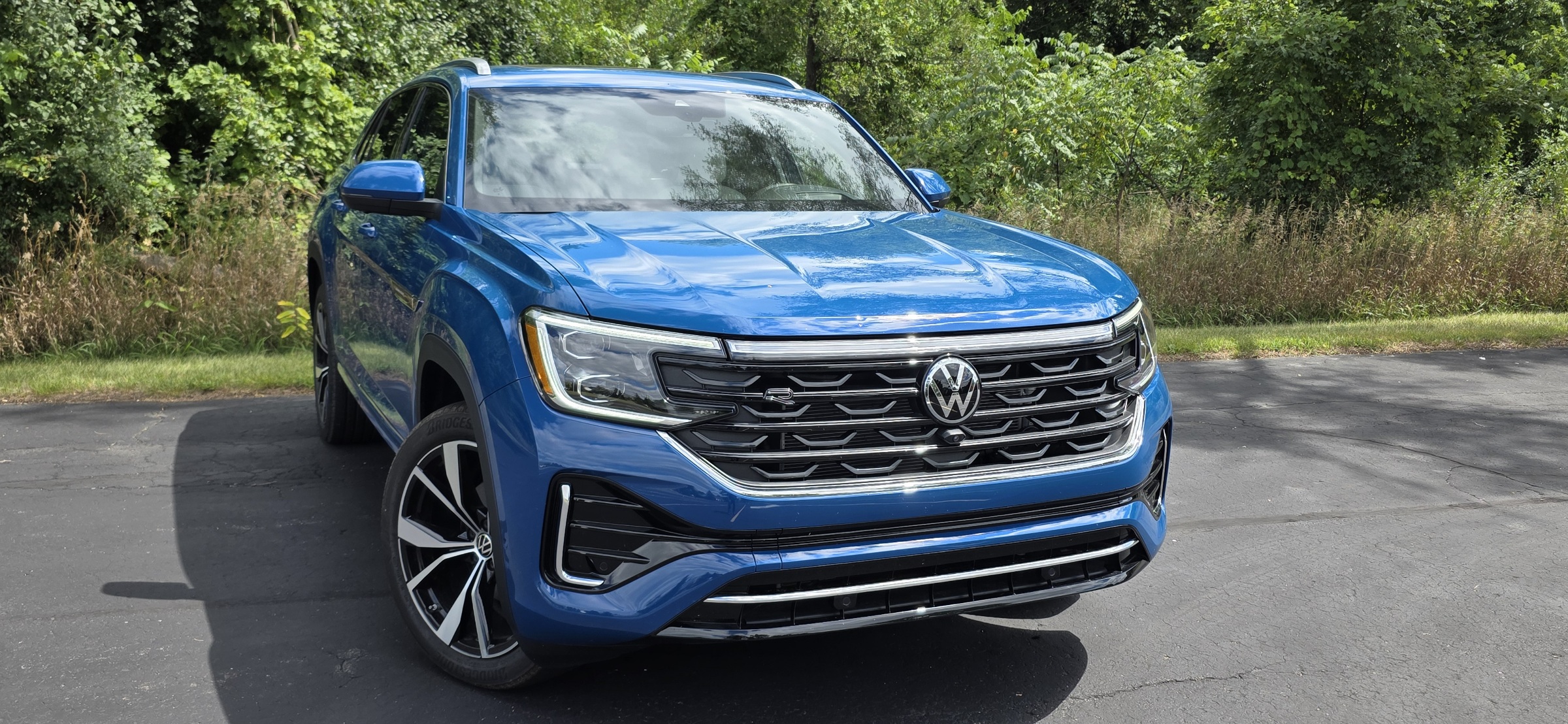
Volkswagen is in a very strange place. It’s lineup of EVs is proving hard to move in the U.S. with the retro-flavored ID. Buzz so far proving to be a slow seller that’s forcing dealerships to already put discounts on it to get it off of their lots. On the other hand, it has a pretty stable and successful lineup of ICE-powered vehicles with their SUV lineup in particular being a welcome boost to their bottom line. One of these is the 2025 Volkswagen Atlas a full-sized SUV that aims to bring more large families into the Volkswagen fold. But is the Atlas still a compelling SUV entry?
Cross Sport is still the fun one

To find out, we chose to skip the regular Atlas this time and instead spent sometime with its slightly funner counterpart, the Cross Sport. The Cross Sport is supposed to appeal to adventure seekers and it has distinct rear styling with the roofline sloping downward towards the sporty looking rear light bar.
The Cross Sport along with its more functional counterpart received a major refresh in 2024 and as a result, the 2025 updates are fairly minor with a new SEL R Blackline joining the family as well as several color shuffles with Avocado Green graduating into the main color lineup after a year of being exclusive to the Peak Edition.

The light touch allows the Cross Sport to have a strong degree of familiarity among buyers and the sporty styling also gives it a certain degree of pop which is certainly better than the Nissan Murano which went in a more subdued direction for its revamp.
Tech filled interior continues to please

Slip inside the Cross Sport and you’ll find that the sloping roofline does make you pay a price off the bat with the Cross Sport losing its third row seats and having tight headroom for taller passengers in the second row.
Look past that though and you’ll find that the cabin benefits from improved plastics and materials which helps create an upscale atmosphere. Heated and cooled front seats are newly standard and some trims even get heated rear seats and quilted leather upholstery that blurs the line between it and an Audi.

The tight second row headroom aside, the rest of the cabin is very spacious with occupants getting a healthy amount of leg and arm room. The second row seats also help boost cargo room when they are folded down with the Cross Sport capable of swallowing an impressive amount of cargo including groceries and bulky items like bicycles.

All Cross Sports are outfitted with a 10.25-inch display screen for the instrument cluster as well as a 12.0-inch infotainment screen. Unfortunately, the screens are still bundled with VW’s annoying haptic touch controls though the company is slowly putting analog controls in other models. On the flip side you do get more cupholders than the ID.Buzz and a healthy amount of USB-C charging ports.
Cross Sport’s four cylinder might not seem sporty at first

The Cross Sport follows its three-row sibling when it comes to performance with our tester getting its mojo from a turbocharged 2.0-liter four-cylinder that makes a healthy 269 horsepower and 273 lb-ft of torque. These figures are pretty stout in theory but it doesn’t necessarily translate well in real world use with the engine having a rather relaxed demeanor in its default driving mode.
Put the Cross Sport in Sport mode (no pun intended)and it wakes up the engine somewhat with acceleration being sharper and the shifts from the eight speed automatic being more assertive with our tester making the sprint to 60 mph in 7.0 seconds. The rest of the Cross Sport’s road manners are balanced and compliant but buyers thinking they will see GTI levels of cornering or handling will no find it here. Volkswagen says the Cross Sport can tow up to 5,000 lbs.
But fuel economy continues to be a standout item
The biggest surprise about this SUV continues to be fuel economy. Part of the reason why Volkswagen moved to a smaller four-cylinder engine is because of mileage with the EPA saying a front-wheel drive Cross Sport can get 20/27 mpg in cty and freeway driving. Add an all-wheel drive system like our tester had and those figures get dinged by 1 mpg. This is pretty good for a large SUV though it’s important to note the engine still requires a steady diet of premium fuel which is subject to price swings.
Value Quotient

Pricing for the 2025 Atlas Cross Sport starts at $38,300 with pricing not inlcuding taxes and fees. The bulk of the lineup is firmly entreched in the $40,000 range but climb all the way up into a range-topping SEL Premium R-Line like our tester and you’ll be greeted with a base price of $53,620 with our tester having a minor infusion of optional extras that caused it to have a final ass tested price of just over $55,000
This pricing puts the Atlas in the premium side of the SUV market but it’s also up against some entrenched competition. They include the Mazda CX-70, Jeep Grand Cherokee, and the Nissan Murano. The Mazda outshines the VW in raw performance and it also offers plug-in hybrid alternative for better fuel economy with the latter being absent in the Atlas lineup. Meanwhile the Jeep has better off-road capability in certain trim levels and it too offers a PHEV alternative.

The 2025 Volkswagen Atlas Cross Sport continues to be a valuable player for Volkswagen. The SUV still has a decent amount of poise and quality materials to match its ambitious pricing. However, as time passes, some of its wrinkles do become more noticeable including the lack of a formal hybrid model.
This ongoing absence from the hybrid market could come back to haunt Volkswagen as more automakers shift their focus back to hybrids to try and take advantage of grwing consumer demand. Volkswagen needs sales and the Atlas Cross Sport could bea good canidate for a hybrid transformation to help on that front.


Leave a Reply