When Hyundai debuted the Santa Cruz pickup as an early 2022 model, it marked a bold new direction for the company. The Korean car giant was better known for its lineup of cars and SUVs and the idea of a Hyundai-badged pickup would have been laughed straight out of the boardroom.
However, the Santa Cruz has been a strong seller for Hyundai and the company has prepared a whole host of updates for 2025 that not only sharpen the truck’s looks, but also infuse it with more technology as the company attempts to make the Santa Cruz into a sharper more focused instrument. But have all the changes worked and is the Santa Cruz a true contender in the mid-size pickup wars?
Santa Cruz exterior styling goes under the knife for success

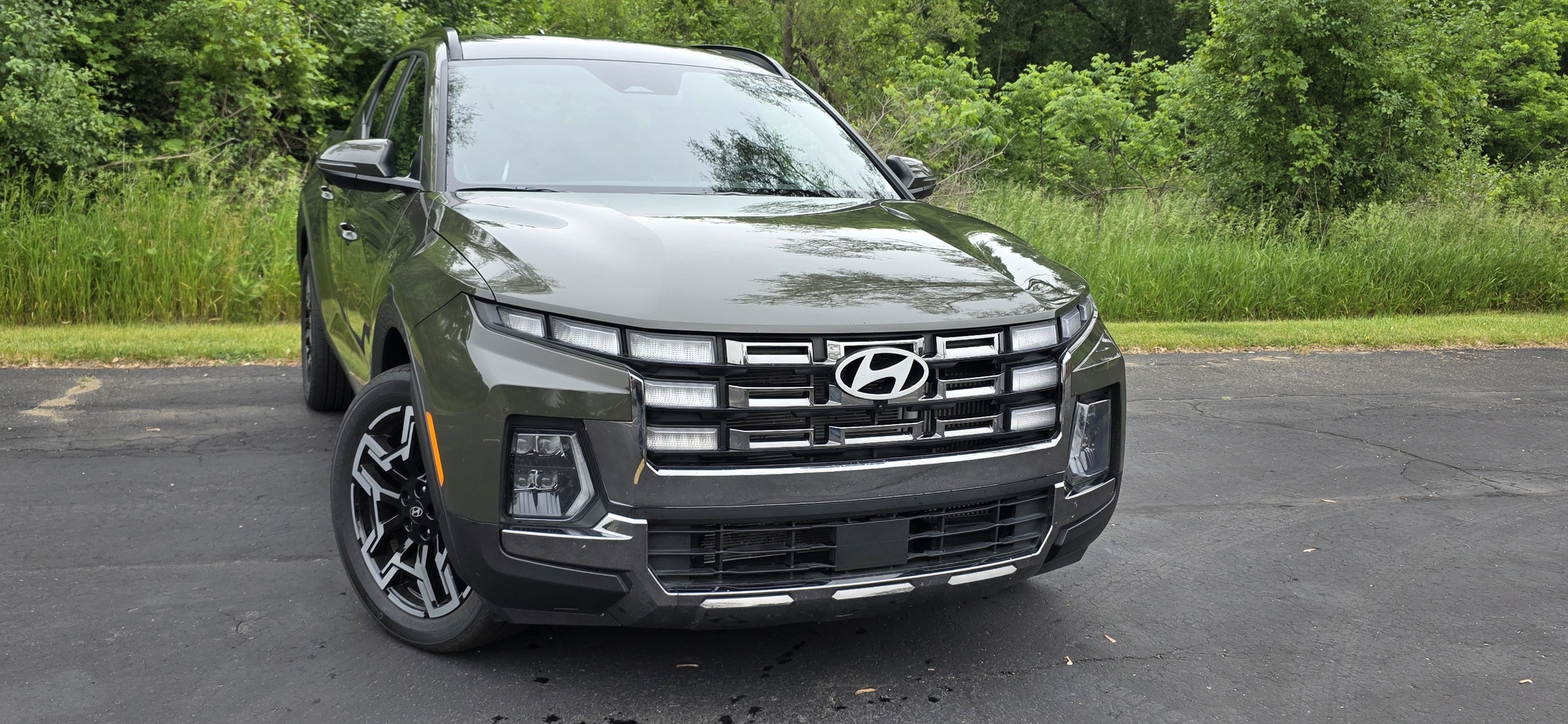
The Santa Cruz is currently in is fourth model year, but while the truck may seem largely unchanged, Hyundai has given the truck some visual improvements for its mid-cycle refresh. The front grille and headlights have been tweaked with the look being largely identical to the refresh the Tucson SUV received. The XRT model bumps it up a notch with these models not only getting gray cladding, but also front mounted tow hooks, new daytime running lights, 18-inch wheels and chunky tires that fill up the wheel wells nicely. With the front fascia getting the bulk of the updates, the side and rear of the truck carryover largely unchanged. The bed retains its integrated trunk, the rear keeps its odd taillights, and the sliding tonneau cover also carried over with this item featuring an integrated locking mechanism and a strap to help shorter occupants operate it.

The Santa Cruz’s sportier appearance puts it at odds with others in its segment including the Ford Maverick which has a more function oriented look despite getting a mid-cycle update of its own to add more polish to the front end thanks to a reworked front grille and headlights. Still, the Santa Cruz is clearly going for a more adventure focused buyer and we think that the bold styling will continue to make a solid first impression when out and about in town.
Upgraded Santa Cruz interior gets more technology

Slip inside the 2025 Santa Cruz and you’ll find a cabin that has benefited from its fair share of upgrades. The separate pods for the infotainment system and the gauges in higher grade Santa Cruz models are gone, and in there place is a single panel that now houses two 12.3-inch screens. Wireless Apple CarPlay is along for the ride and Android Auto is also standard too. Lower trims get a single 12.3-inch screen for the infotainment system and analog gauges. The cabin will continue to be very familiar for those that have spent time in a Tucson SUV but the XRT swaps out some of the shinier trim bits for a blacked out look with our tester coming with rubberized floor mats to keep unwanted muck out of the interior.

Rear seat room is pretty decent for what it is but the sloping roofline does eat into headroom slightly. The rear window also eats alot of rear visibility and that made high speed passing maneuvers a challenge sometimes especially when we drove our mother-in law to the airport during the first half of its stay with us. Sound quality from the stereo was good and the infotainment system continues to retain the simple menu layout that we have enjoyed in other Hyundai products. The steering wheel and the center console have also been restyled and the panel of buttons that control the climate control system have also been reworked.
Carryover performance

With all of the updates that the Santa Cruz has received, performance hardware has largely been carried over from the outgoing model with Santa Cruz buyers getting to choose from two four-ylinder engines. Lower grade models get a naturally aspirated 2.5-liter four-cylinder that makes 191 hp and 181 lb-ft of torque. Buyers looking for more power will have to go up into higher trim levels, with the blacked-out Night, range-topping Limited, and XRT models like our tester being powered by a turbocharged four-cylinder that makes 281 hp and 311 lb-ft of torque. Unlike the naturally aspirated four-cylinder, this engine has more power and is a better fit for freeway driving. An eight-speed dual-clutch automatic is paired with the engine and it did a good job of rowing through the gears. It also helped our tester make the sprint to 60 mph in 6.0-seconds.

All-wheel drive is optional on lower trims except for the SE but XRT and Limited models get it standard. The all-terrain tires on our XRT let in more tire noise than other models, but soggy Michigan weather allowed us to truly appreciate the enhanced levels of wet weather grip which we suspect holds true for muddy backroads when it comes time to make the trek to the summer cottage. Steering in our tester was solid and composed but there were numb spots that made themselves known when going lock to lock. The EPA says tha a naturally aspirated version of the Santa Cruz can get 22/26 mpg in city and freeway driving but turbocharged version like our rig see these figures dip slightly to 19/27 mpg in the same categories.
Value quotient

Pricing for the 2025 Hyundai Santa Cruz continues to target value-focused customers with a base SE model starting at $28,750 before taxes and fees are added in. The pricing ladder goes up in a gradual manner with the SEL and its slightly more upscale sibling the SEL Activity starting at $30,450 and $33,450 respectively. XRT models like our example are the first to enter the $40,000 range with a base version staring at $40,250. Our tester arrived with a light sprinkling of options, and these options along with some fees caused our tester to ring in at just over $43,000.
The range-topping Limited only goes up slightly to $42,750 but in our opinion we would actually go for the XRT. This model not only comes with virtually the same level of equipment as the Limited (including the turbocharged four-cylinder) but is also the model that fully embraces the Santa Cruz’s bold personality the best and with style taking center stage here on the Santa Cruz, we think buyers will appreciate its charms


Leave a Reply